
Fisticuffs at Davos

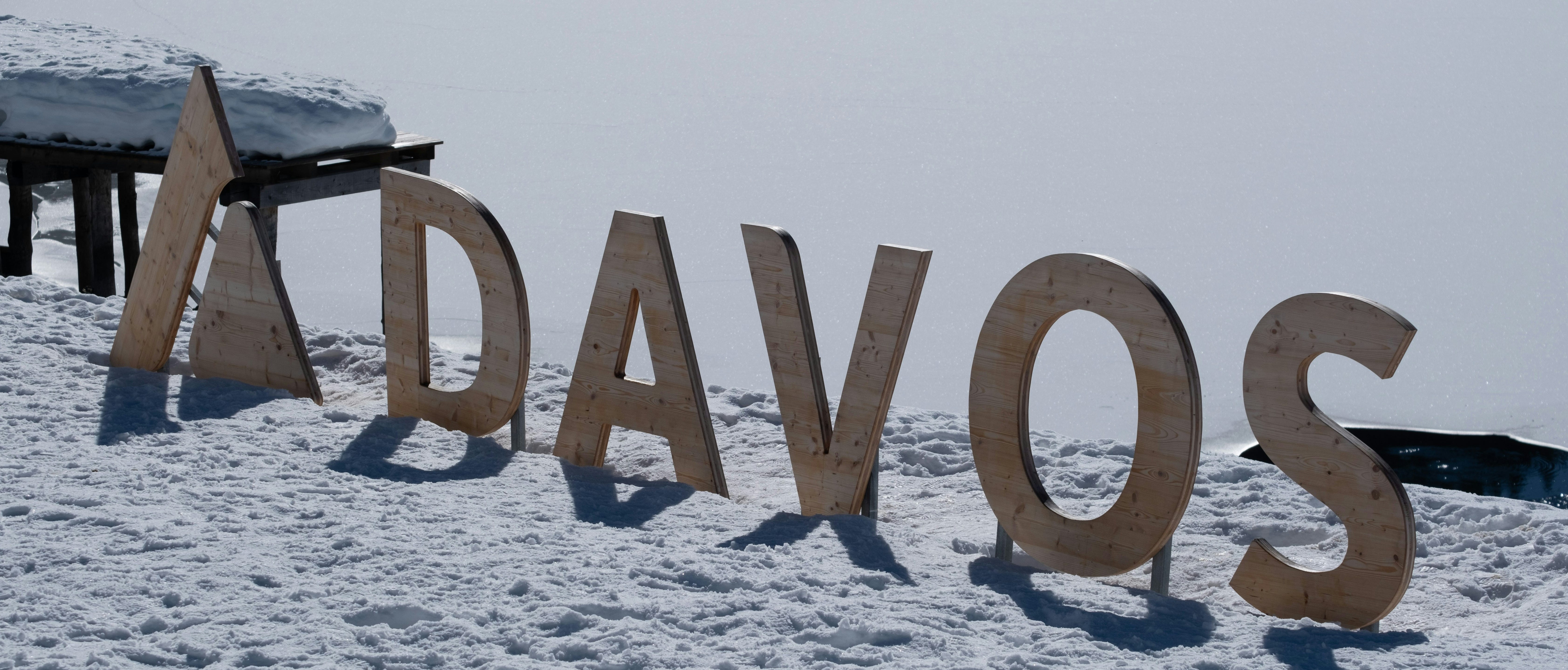
Last week, the annual World Economic Forum took place in Davos, Switzerland. This 56th annual WEF meeting brought together near-record attendance, including 3,000 leaders from government, business, tech, and civil society from over 130 countries. Donald Trump appeared as a guest and gave a policy speech.
Trump stated,
This afternoon, I want to discuss how we have achieved this economic miracle, how we intend to raise living standards for our citizens to levels never seen before, and perhaps how you, too, in the places where you come from, can do much better following what we’re doing. Because certain areas in Europe are not even recognizable, frankly, anymore — not in a positive way. I love Europe, and I want to see it succeed, but it’s not heading in the right direction.
In recent decades, the conventional wisdom was that growing Western economies required increasing government spending, unchecked mass migration, and endless imports. The consensus was that so-called dirty jobs should be sent elsewhere, the Green New Scam should replace affordable energy, and countries could be propped up by importing new populations from faraway lands.
Trump’s speech followed that of the Prime Minister of Canada, Mark Carney, who urged the “Middle Powers” to unite and take on the major powers. He asserted that the middle powers had been naive, thinking that as long as they were compliant with the US, all would be well. But now, the major powers have discarded fairness and are exploiting power for their own benefit.
He stated, “It seems that every day we’re reminded that we live in an era of great-power rivalry — that the rules-based international order is fading, that ‘the strong do what they can, and the weak must suffer what they must.”
Carney refuses to recognize Trump’s main point, that the “rules-based order” is fading because it has corrupted itself. Trump, in using the term “certain areas of Europe are not recognizable,” describes the neoliberal/globalist failure of the continent. Carney and his cronies from the EU have created a right/wrong scenario based on their definition of right. Anyone who opposes neoliberalism is dangerous and must be stopped.
The traditional West has been transforming Europe since the fall of the Soviet Union and the formation of the EU. But the EU has not lived up to its billing and has become a bloated bureaucracy that stands in the way of its member states’ decision-making. Rules for all have subverted the operations of each member. Britain and France, as two prime examples, can’t go back. Each has a single global metroplex that acts as its international source of money and power. The neoliberals who operate there are embedded in the international elite club, which pursues the ideal of global government. The “new elites” have replaced the old bourgeoisie. They define themselves by education, mobility, and cultural openness rather than property or industry. They dominate media, politics, universities, and NGOs, shaping norms and policy. Meanwhile, citizens who do not live in London or Paris are not given the same opportunities. The upper classes call for equality, but their own citizens are being ignored.
Immigration policy and multicultural discourse are managed at the city level, but the social and economic strains are often felt more intensely in peripheral areas with fewer resources. Urban professionals have replaced the traditional working-class base of left-wing parties. The left now represents the cultural values of cities rather than workers’ material interests. Peripheral citizens still vote, but they no longer feel represented. This produces distrust of institutions and rising support for outsider movements.
Populism is a rational response to government failure, as seen in movements like the Gilets Jaunes (Yellow Vests) and Brexit, and in predictable reactions from people who feel abandoned by a system run for metropolitan interests. Unfortunately for Europe, there is no populist political power like that exercised by Trump.
Its populist parties operate from the right because the left controls the neoliberal juggernaut. The establishment attacks those parties as being authoritarian and dangerous. In other words, “Don’t let them acquire power, or it’s Hitler time again.” In Germany, the populist wave is being driven by the AfD (Alternative für Deutschland, or Alternative for Germany). The globalists in Germany attribute its rise in popularity to the ignorance in the former East Germany (where it was founded) and Russian disinformation. The AfD has been labeled as an extremist party by the government, which means its activities are being closely monitored.
Other European countries have populist movements.
In France, the National Rally (Rassemblement National) is a nationalist, anti‑immigration, and Eurosceptic (opposed to the EU) party. La France Insoumise is a left‑wing populist party focused on economic reform and anti‑neoliberalism.
In Italy, the Brothers of Italy & Lega is nationalist, security‑focused, and skeptical of EU policy: Italexit advocates for leaving the EU and eurozone.
In the Netherlands, the Party for Freedom (PVV) is a Nationalist, anti-immigration, and Eurosceptic party.
In Spain, Vox is nationalist, anti‑immigration, and culturally conservative.
In the United Kingdom, Reform UK is nationalist, anti‑elite, and immigration‑focused.
In Canada, there is growing dissatisfaction over issues specific to that country. These include regional grievances (West vs. Ottawa), policy and bureaucratic matters, and economic/material complaints. Alberta is about to hold a referendum on separating from Canada. As of now, they are collecting signatures to put the referendum on this year’s ballot.
Given the tide they’re fighting against, the right-wing parties in Europe do not have, and may never have, the power to effect change. Part of the problem is their form of government. Some political theorists tout the parliamentary system because it is used in Europe, and they consider it superior to our system. They argue that there is no separation between the executive and the legislature, which means less gridlock.
In a parliamentary system, the executive (the Prime Minister and cabinet) is drawn from the legislature. The government only exists as long as it has majority support in parliament. If it loses support, it falls and is replaced.
For the same reasons they have less chance at gridlock, the European governments are incompatible with populist movements. Since the executive in a parliamentary system is drawn from the legislature, the prime minister is part of the establishment rather than an outsider. There will never be a populist prime minister because the parties would never allow it.
The American system allows a populist to be elected directly by the people. That has enabled us to reject the neoliberal/globalist ideology that is destroying Europe.
Photo by Daniel Bargetze on Unsplash
I’m thankful to read your thoughts on this.